Showing posts with label goshen school district. Show all posts

Oct 12, 2015

Early Marathon Swimming in USA

Early Marathon Swimming in the United States


Friendships cast in the belly of competition, team sport outlive today's trials and tribulations of fast paced life and distance for Steve Conder and Don Macdonald. 

In the summer of 1980 then standout high school swimmers, along with a third (Craig Kercher) and coach (John Gibson) who had all swum for Bryan Rathke's UN-defeated Goshen Redskin swim squad embarked on what would be their biggest swim challenge yet, joining the early namesakes of US open water swims like John Kinsella, Lynn Cox, and others albeit not at that level but certainly well ahead of a sport that today is exploding.

Macdonald, Conder and Coach Gibson welcoming
the beach after a successful swim.

Marathon swimming

A class of open water swimming defined by long distances (at least 10 kilometers) and traditional rules based in English Channel swimming. Unlike marathon foot-races which have a specifically defined distance, marathon swims vary in distance. However, one commonly used minimum definition is 10 kilometers, the distance of the marathon swimming event at the Olympic Games.[1]
As in all open water swimming, tides, surface currents and wind-chop are major determinants of finish-times. For a given course, these factors can vary dramatically from day to day, making any attempt to draw conclusions about athletic ability by comparing finish times from performances undertaken on different days meaningless.
One of the earliest marathon swims was accomplished in 1875 by Captain Matthew Webb, when he became the first person to swim across the English Channel. Similarly, perhaps the most famous marathon swim of all-time was accomplished in 1926 by Gertrude Ederle, when she became, at 19 years of age, the first woman to swim across the English Channel. In doing so, she demolished the existing world record for the crossing, by employing the crawl stroke technique.
The Triple Crown of Open Water Swimming includes three of the most well-known marathon swims: (1) 21 mi (34 kilometres) across the English Channel, (2) 20.1 mi (32.3 kilometres) between Catalina Island and the mainland in Southern California, USA, and (3) 28.5 mi (45.9 kilometres) around Manhattan Island in New York City, USA.
The Ocean's seven is a collection of seven channel swims: (1) North Channel between Ireland and Scotland, (2) Cook Strait between the North and South Islands of New Zealand, (3) Molokai Channel between Oahu and Molokai Islands in Hawaii, (4) English Channel between England and France, (5) Catalina Channel between Santa Catalina Island and Southern California, (6) Tsugaru Strait between the islands of Honshu and Hokkaido in Japan, and (7) Strait of Gibraltar between Europe and Africa.

Competitive Friendship Builds Life Long Resilience


My friend Steve Conder whom I swam across Lake Wawasee and Syracuse (8 miles) in the early 1980's accompanied by our fellow swim team member Craig Kercher and coach John Gibson did what was barely even known back then an open water swim.


Back then we learned about fueling the hard way.


We began swimming together in grade school along with a whole bunch guys and girls (whom I will not try to name as I would inevitably miss someone accidentally, but you know who you are). These friends became all close and through our parents families included.

After high school we all went our separate ways. Many on to college or not but usually catching up in the summer. Years turned into 10, 20, and 30.  Social Media made it easy to get back in touch, catch up and realize his was the foundation to life long resilience. Warriors in the finest Redskin tradition competing against each other with the highest regard pushing each other well beyond our youthful character to become among the best in the State of Indiana's swimming tradition. Competitive spirit pushed us both to become our best, our friends and coaches (school and family) always supporting us to challenge the next thing, to push harder, to believe in ourselves. Little did we know these attributes would follow us for years. 

We have all shared in personal failures throughout life, felt sorrow for the friends, coaches and family we have lost, but I would say these teachings allowed us to stay on course, persevere and to realize there is no "I" in "We".




Nov 25, 2014

When Great Swim Coaches go to the 'Big Pool'

Coach Rathke

I really don't recall when Brian Rathke become a role model, it seemed like he was there forever sometimes boldly in front and other time quietly in the background, but always there. 

Somewhere in those early AAU age group years he kept order. Those formative silly days, he corralled us from running around the pool deck, stopped us from snapping each other with towels to often, kept the atomic sit-ups and if got into real trouble the famous "60 second" treatment wasn't far behind. By todays standards... well thats something we swimmers keep to ourselves. Lets suffice it to say with Brian you knew where the rules were and where you stood.

As we got older he kept us on task both in school and in the pool, keeping us focused on doing well while teaching us life lessons. He used swimming as a teaching tool to focus us on how to achieve goals, do well in life, sometimes outside of our comfort zone.

I remember early on learning that he was one of the fastest 50 butter flyers in the world, until this guy named Mark Spitz came along. I was always awed by this and impressed as he would challenge us kids to races and easily whack us off one at a time. I don't think anyone ever beat him? 

At the same time he somehow understood that fun and tradition was essential to life, a way to mark our path for others to follow. He let us play, grow, and have fun. Yet you always knew he expected more, better, faster. Somehow he fostered a group of kids into fierce competitors that respected each other making us into winners with the winningest duel meet record in the history of Indiana and perhaps the country. Yet none of us were olympians, a few state champions, but always a team. Lets be honest we were average kids he molded into winners.

As we graduated and went our own ways, some kept in touch regularly, others less so but as the years came on and we would run into one another the conversation would naturally drift back to coach. What’s he up to, how’s he doing, still swimming – nope but his kids are, who’s winning for him now, etc. Some went on to coach and even became more successful. Was he the only influence? Of course not.  Chris Shorthouse himself a kind persistent leader was always present. Older swimmers who learned under Brian gave lessons to us younger kids along the way, names like Gibson, Neff, and Fult to name a few.

Swimming is one of the unique activities in life that forces someone to display themselves publicly forcing you to become confident, a better human both inside and out. Bryan took each one of us, like an unpainted canvass and added color, texture, waves. Working with parents, teachers, and friends to support and guide us to adulthood.

Nowhere across this spectrum of lives do you find a loser, a failure. Sure we are all different but thats life. That’s really the amazing takeaway.


Thank you coach. Ill see you someday, but not just yet, Ive got some more laps to swim.


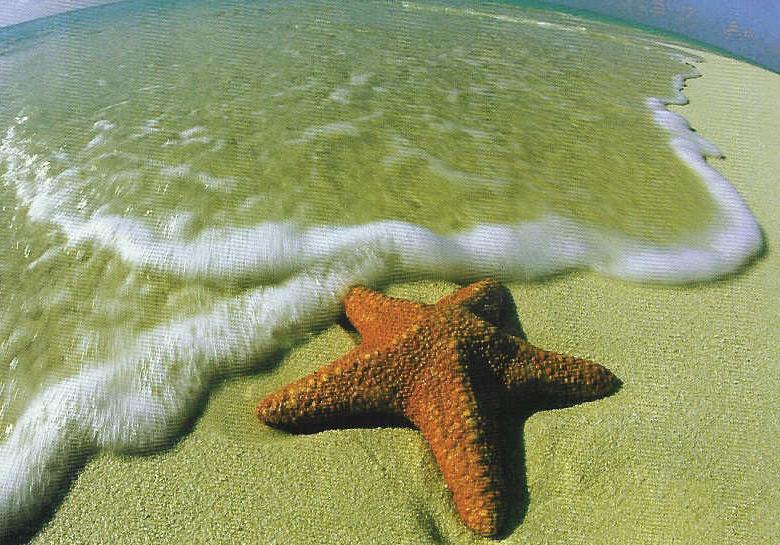
Once upon a time, there was an old man who used to go to the water. He had a habit of walking on the beach every morning before he began his work. Early one morning, he was walking along the shore after a big storm had passed and found the vast beach littered with starfish as far as the eye could see, stretching in both directions. 

Brian saw each of us perhaps like a Starfish?
Off in the distance, the old man noticed a small boy approaching.  As the boy walked, he paused every so often and as he grew closer, the man could see that he was occasionally bending down to pick up an object and throw it into the sea.  The boy came closer still and the man called out, “Good morning!  May I ask what it is that you are doing?”

The young boy paused, looked up, and replied “Throwing starfish into the ocean. The tide has washed them up onto the beach and they can’t return to the sea by themselves,” the youth replied. “When the sun gets high, they will die, unless I throw them back into the water.” The old man replied, “But there must be tens of thousands of starfish on this beach. I’m afraid you won’t really be able to make much of a difference.”


The boy bent down, picked up yet another starfish and threw it as far as he could into the ocean. Then he turned, smiled and said, “It made a difference to that one!”
Adapted from The Star Throwerby Loren Eiseley (1907 – 1977)