Don Macdonald of the USA and France blogs his aquatic journey swimming, hosting swims around the world, one body of water at a time.
Those who aspire to this life goal please join and share.
#onestrokeatatime
On the evening of Saturday August 4, 2012, 17 year-old Missy Franklin won her fourth Gold medal of the London Olympic Games when she swam the backstroke leg of the women’s 4×100 medley relay. It was Missy’s second world record of the Olympic games; it was her 5th Olympic medal.
It was a crowning moment for swimming’s brightest new star and end of a chapter of her marvelous journey.
That Saturday was also the end of her teammate Kara Lynn Joyce’s long and productive Olympic career. And though she finished with four Silver medals, just making it to her third Olympics was her greatest accomplishment.
The fortunes of Missy and Kara – and that of their coach, Todd Schmitz – are the stories of Touch the Wall.
Missy’s story is becoming known – an all-American teenager who, when she’s not dominating her competition in the pool can be found doing her homework, hanging out with her friends, or just having fun at whatever she’s doing. And she possibly might just be the nicest person on the planet.
As for Kara, she finished her college career as one of the most decorated female swimmers. She has long had the reputation as one of the sport’s hardest workers … and most respected athletes.
Somewhat unexpectedly, they both made the Olympics, and Missy had a phenomenal start to her Olympic career as she won 4 golds and a bronze.
Touch the Wall is the story of how these two amazing women and their coach got to where they are. It’s a story of winning and losing, of commitment, and of triumph through adversity. It’s also a story of family, of loving what you do, and having fun with the people around you.
In a world starved for heroes, Missy and Kara stand tall in Touch the Wall.
Event:Touch
the Wall movie screening
Place:Barrington
Area Library – Meeting Room
505 N. Northwest
highway
Barrington, IL 60010
Dates:Friday,
January 30, at 6:30 p.m.
Saturday,
January 31, at 9:00 a.m.
Admission:$5 per person
donation to the BAM and BSC
I really don't recall when Brian Rathke become a
role model, it seemed like he was there forever sometimes boldly in front and other time quietly in the background, but always there.
Somewhere in those early AAU age group years he kept order. Those formative silly days, he corralled us from running around the pool deck, stopped us from snapping each other with towels to often, kept the atomic sit-ups and if got into real trouble the famous "60 second" treatment wasn't far behind. By todays standards... well thats something we swimmers keep to ourselves. Lets suffice it to say with Brian you knew where the rules were and where you stood.
As we got older he kept us on task both in school and in the pool, keeping us focused on doing well while teaching us life lessons. He used swimming as a teaching tool to focus us on how to achieve goals, do well in life, sometimes outside of our comfort zone.
I remember early on learning that he was one of the fastest 50
butter flyers in the world, until this guy named Mark Spitz came along. I was always
awed by this and impressed as he would challenge us kids to races and
easily whack us off one at a time. I don't think anyone ever beat him?
At the same time he somehow understood that fun and tradition was essential to life, a way to mark our path for others to follow. He let us play, grow, and have fun. Yet you always knew he
expected more, better, faster. Somehow he fostered a group of kids into fierce competitors that respected each other making us into winners with the winningest duel meet record in the history of Indiana and perhaps the country. Yet none of us were olympians, a few state champions, but always a team. Lets be honest we were average kids he molded into winners.
As we graduated and went our own ways, some kept in touch
regularly, others less so but as the years came on and we would run into one
another the conversation would naturally drift back to coach. What’s he up to,
how’s he doing, still swimming – nope but his kids are, who’s winning for him
now, etc. Some went on to coach and even became more successful. Was he the only influence? Of course not. Chris
Shorthouse himself a kind persistent leader was always present. Older swimmers who learned under Brian gave lessons to
us younger kids along the way, names like Gibson, Neff, and Fult to name a few.
Swimming is one of the unique activities in life that forces
someone to display themselves publicly forcing you to become confident, a better
human both inside and out. Bryan took each one of us, like an unpainted canvass and added color, texture, waves. Working with parents, teachers, and friends to
support and guide us to adulthood.
Nowhere across this spectrum of lives do you find a loser, a
failure. Sure we are all different but thats life. That’s really the amazing takeaway.
Thank you coach. Ill see you someday, but
not just yet, Ive got some more laps to swim.
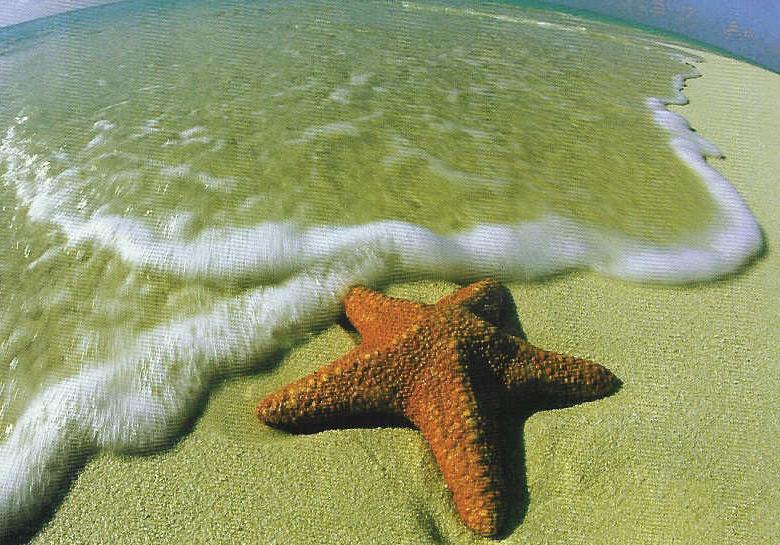
Once upon a time, there was an old man who used to go to the water. He had a habit of walking on the beach every morning before he began his work. Early one morning, he was walking along the shore after a big storm had passed and found the vast beach littered with starfish as far as the eye could see, stretching in both directions.
Brian saw each of us perhaps like a Starfish?
Off in the distance, the old man noticed a small boy approaching. As the boy walked, he paused every so often and as he grew closer, the man could see that he was occasionally bending down to pick up an object and throw it into the sea. The boy came closer still and the man called out, “Good morning! May I ask what it is that you are doing?”
The young boy paused, looked up, and replied “Throwing starfish into the ocean. The tide has washed them up onto the beach and they can’t return to the sea by themselves,” the youth replied. “When the sun gets high, they will die, unless I throw them back into the water.” The old man replied, “But there must be tens of thousands of starfish on this beach. I’m afraid you won’t really be able to make much of a difference.”
The boy bent down, picked up yet another starfish and threw it as far as he could into the ocean. Then he turned, smiled and said, “It made a difference to that one!”
There are some things you cannot place an economic value on, a child’s life if one of them
Dr. Marek, an internationally recognized cardiologist, here with Ultra marathon open water swimmer Don Macdonald, has taught physicians across America how to run screenings for students and athletes. Over 10,000 community volunteers.
Young Hearts for Life® (YH4L) and One Stroke at a Time supported a recent Barrington High School (Chicagoland) Cardiac Screening Program Event, YH4L nationally known for its unique model, has screened over 110,000 students for conditions that cause sudden cardiac death. This milestone is a first for any heart screening program of this kind in the United States.
Each week, sudden cardiac death claims the lives of more than 60 young adults in the United States. YH4L has been a leader the medical community to address this problem in the Chicago area.
The YH4L screening program was founded by Dr. Joseph Marek in 2006 and is well known for its unique model that uses trained community volunteers to deliver a low cost, efficient screening program.
To date, over 1,900 students screened through YH4L have been identified as “at risk” students. Of those, hundreds were found to have life threatening conditions, including Hypertrophic Cardiomyopathy, Long QT Syndrome, Wolff-Parkinson- White Syndrome (WPW), Brugada Syndrome, and Arrhythmogenic Right Ventricular Dysplasia.
Living proof (one of the 1%er's) to the value of finding these hidden health challenges. I encourage you to consider having your kids screened every two years and while your at it yourself.
Master Swimmer Don Macdonald knows in his heart that he would be gearing up to swim the English Channel if not for a cardiac arrhythmia that very nearly killed him.
Learning how to "take it easy" after the near-fatal episode, the 52-year Barrington man kayaked 28.5 miles around Manhattan Island on Saturday. Macdonald and his marathon swimming buddy and fellow Barrington resident, Doug McConnell, 56, have completed several similar grueling swims. But for the Manhattan Island Marathon Swim, Macdonald merely offered support from the kayak as McConnell swam the course to raise money in the fight against ALS.
"Kayaking," Macdonald says dismissively, "is very easy."
With the tide helping propel his kayak, Macdonald says his effort was more emotional than physical.
"There's value in helping other people achieve their dreams," Macdonald says, recalling how he rooted as his investment banker friend swam the English Channel in 2011 just before a storm wiped out Macdonald's scheduled shot at fame. "You want to revel in his success, and at the same time I say, 'Oh, man, I wish that could be me. I know I could do it.'"
A doctor on the medical team that saved Macdonald's life says the environmental engineer appeared to be in shape for that 2011 trek across the choppy, cold water that separates England from France.
"Fortunately, he didn't get to do the English Channel," says Dr. George Christy, a cardiologist with Advocate Good Shepherd Hospital in Barrington. "Swimming that distance in the cold of water for that long of time, there is a likelihood something adverse would have happened."
The bad weather that scuttled Macdonald's Channel swim gave the swimmer time to discover that a lingering pain in his shoulder blades was not just a training ache but a symptom of coronary disease.
"Here I am, a guy who swims 25 miles in 60-degree open water, and you're telling me I have clogged arteries?" Macdonald asked in disbelief.
Doctors inserted stents to open his narrowed arteries and put Macdonald on medication to regulate his heart.
"I'm fixed. They put the stents in. Let's go. Woo-hoo!" he remembers thinking. After a year of treatment and several stress tests on his heart, Macdonald was cleared to train again for a Channel swim this September.
"Even fit people develop coronary disease," says Christy, who adds that Macdonald developed another problem. "It's a false invulnerability people get, especially when they are endurance athletes. There's an aura of invincibility to some of these guys, and you can't blame them."
Having set swimming records during his high school career in Goshen, Indiana, competed on the swim team at Ball State University, played on the water polo team at Indiana University and enjoyed success as a master swimmer beating younger athletes, a confident Macdonald backed off his medications. "I made the decision to go with the less potent (medication), and it almost cost me my life," he says.
"He goes out for a jog when it's 100 degrees, which I wouldn't recommend for anybody," Christy says. Macdonald ran up to his home in the midst of a block party and "crashed," the doctor says, explaining how the athlete's heart went into ventricular fibrillation, an uncoordinated heart rhythm, which can be fatal.
A retired nurse on the scene performed CPR and a medical emergency team got him to Advocate Good Shepherd Hospital's emergency room within minutes. Knowing Macdonald's tolerance for long swims in cold water, doctors used a device to put him in a hypothermic state that lowered his body temperature.
"Neurological recovery was key," says Christy, noting that hypothermia slows the metabolic process that can cause cognitive damage when the brain goes without oxygen. Tests showed his heart and blood pressure were good. But Macdonald's life was in danger for days.
"Is he or is he not going to wake up? It was all guesswork until we warmed him up," Christy says.
"I wake up three or four days later," Macdonald says. "I don't remember a thing. I don't remember seeing a light at the end of the tunnel. Nothing."
Knowing how close he came to dying and leaving behind his daughter, Rachel, 16, and his wife, Jennifer, Macdonald says he wants others to know the value of stress tests and good cardiac care.
"The harsh reality is very scary," say Macdonald, who practices kayaking in Lake Zurich and on Lake Michigan, but misses swimming. "I have been in the swimming pool three times, and just sort of paddled around. I'd be lying to you if I didn't say it was scary."
Long, open-water swims have been part of his life since high school, when he and pal Steve Conder swam 8 miles across Lake Wawasee in Indiana. Macdonald has completed swims from Alcatraz off the coast of San Francisco and lighthouses off the coast of Boston. He and McConnell swam marathon races in Crystal Lake, Minnesota and Wisconsin.
"We were beating kids in their 20s and 30s pretty regularly," Macdonald says. "One night at the dinner table, drinking some wine, we said, 'How about the English Channel?'"
McConnell became the 48th person older than 50 to swim the Channel and continues to do well in marathon swims. Macdonald, who has a device implanted in his chest to shock him if his heart gets out of rhythm, stays in the kayak.
"If it goes off when you're facedown in the water, you could drown. After all this, to die drowning, that would be really embarrassing," Macdonald says. "But I just can't sit on a floaty and hang around. It's not me."
When talk turns to his English Channel quest, he repeats the mantra, "Sometimes you have to let that go." Then he pauses.
"I'll tell you," Macdonald says, softening his voice as if he's sharing a secret. "I'm not so sure about that."
Reprinted with modifications from Daily Herald, Burt Constable.
Macdonald, 52, previously swam the length of Tampa Bay, the Boston Harbor, Lake Zurich, Lake Michigan, off the coast of California’s Seal Beach and Manhattan Beach, and in the La Hoya Cove off the coast of San Diego.
Reprinted: Barrington Courier Bridget O'Shea
“I think water gives me a sense of freedom, but it’s a very quiet, lonely freedom,” said McDonald, noting that he has sometimes shared this freedom with jellyfish, dolphins and sea lions.
However, a different type of challenge presented itself to MacDonald in 2011, when he began to experience cardiac issues after returning from a trip overseas, where he planned to swim the English Channel but was unable to due to weather conditions.
While taking a break from swimming, MacDonald began experiencing shoulder, arm and chest pain, which he said he was not too worried about.
“When you’re training 10K a day for swimming, your body is going to ache,” he said.
However, it turned out that MacDonald did have mild heart issues. After seeing his doctor, who then referred him to a cardiologist, MacDonald was treated with stents for narrowed arteries, given a typical medication regimen and stress tests. He was later approved to begin training again for the English Channel.
“During that time, I was actually out jogging and I had a major cardiac arrhythmia event that put me in the hospital for 10 days,” he said. “I was standing at a block party after I ran and I collapsed. This kind of came out of the blue, which is why it was so challenging to wrap my head around.”
Luckily, a retired nurse was at the party and began resuscitating him.
“She saved my life,” he said.
MacDonald was taken to Advocate Good Shepherd Hospital, where cardiologists implanted a small defibrillator device just beneath his skin to detect any abnormalities and reset electrical impulses.
“It’s been challenging physically and emotionally,” said MacDonald, who was used to training by swimming up to 26 miles at a time in 50-degree water.
But instead of focusing on any setbacks, MacDonald is now using his experience as an example of the importance of proper health screenings and evaluations for open water swimmers, triathletes and others that engage in vigorous sports.
“People have to pay attention to what they are doing to their bodies,” he said. “Everybody needs to consider their health situation carefully. Here’s a guy who could swim the English Channel and look what happened to me.”
Particularly with high endurance sports, MacDonald said, a feeling of being indestructible can sometimes develop, leading to a false sense of security. He uses himself as an example.
“Before this, it had gotten to the point where I was no longer afraid to swim in any body of water regardless of seals, sharks or the temperature of the water,” he said. “The biggest thing is that you go from being able to do anything and everything to, ‘OK, what do I do now?’”
Since his 2011 stay at Good Shepherd, MacDonald has reached out to the community, working with high schools, middle schools and the District 220 Educational Foundation by speaking to young people as a living example of the importance of cardiac and other medical tests and screenings for athletes.
While less vigorous exercise is now part of his recovery, MacDonald, who has swum since he was a young child, has not lost his love for the water.
On June 28, he will kayak the perimeter of Manhattan Island in New York as his friend Doug McConnell swims in the Manhattan Island
Marathon Swim.
“Instead of curling up and being the wilting flower, I decided that instead of swimming every day, I would do kayaking,” he said.
MacDonald will kayak next to a 9-foot boat with food, water and medical supplies for the swimmers. His main objective, he said, is the safety of his friend.
MacDonald has kayaking experience, most notably the 28 miles from Catalina Island to Los Angeles, a ride that began in the middle of the night.
“It was pitch black,” he said. “You could hear dolphins and whales.”
Originally from Goshen, Ind., MacDonald said he moved to Barrington from Chicago about 15 years ago and he and his wife enjoy raising their daughter here.
“It’s a great community,” he said, describing Barrington as a place where you can go to the city, go horseback riding or go into town for ice cream.
“It truly has everything you want from a small town,” he said. “It’s kind of the quintessential experience.”
The 28.5 kayaking trip around the Island of Manhattan will be both grueling and scenic and more importantly bringing awareness to Two important Causes (literally near and dear to my heart) - Cardiac Arrhythmia Prevention and Doug McConnell's ALS charity efforts. Doug’s swim will be accompanied by an escort boat with two crew members (Susan and Cliff Wilson I believe) as well as the support of a kayak manned by his long-time training partner, Don Macdonald. Bob Lee and others will be biking around the Island as well all supporting the cause and friend in the quest for raising money and awareness.
Here is a short video clip of the perspective from the kayaker and support crew for Manhattan Island.
Don's Journey since the English Channel has taken a twisted path.
While starting my training for a second attempt the English Channel that was planned for this fall (2014) I had a sudden cardiac arrhythmia event, collapsed, received life saving help. I was found to have arrhythmia problems perhaps brought on by high intensity exercise, that had gone undetected perhaps for years despite years of grueling training and hours submerged in ice cold water and distances.
Well I survived and now find myself with an implanted ICD to prevent such future events. I was running, which I jokingly say was the problem, instead of swimming. "I think ICD stands for I Can't Die".
However my experience now takes me down a path relatively untraveled since only about 1% of such incidents leave survivor's. So onto the next chapter of my swimming journey just One Stroke At A Time and Advocate Health System, Cardiac Care Services.
I am hopeful to return to the pool in the near future. But until then kayaking for Doug and his cause is great. We been at his for five years and like open water swimming, you have to adapt. As Dori says...just keep swimming, swimming, swimming, or in my case kayaking, kayaking, and kayaking.
Doug's ALS Challenge:
After another long year of training, the A Long Swim Team is planning for the Manhattan Island Marathon Swim, a 28.5-mile circumnavigation of the most prominent island that makes up New York City, in June 2014. In the unique world of marathon swimming, successfully completing swims across the English Channel, The Catalina Channel and around Manhattan Island is considered the “Triple Crown.” If he completes the third leg of that challenge, Doug will be in a select club of fewer than 100 swimmers with that honor.